

What helped the world survive the biggest oil shock in decades?
by Forbes IndiaAug 7, 2026, 1:19 PM GMT+0:00
Share this article
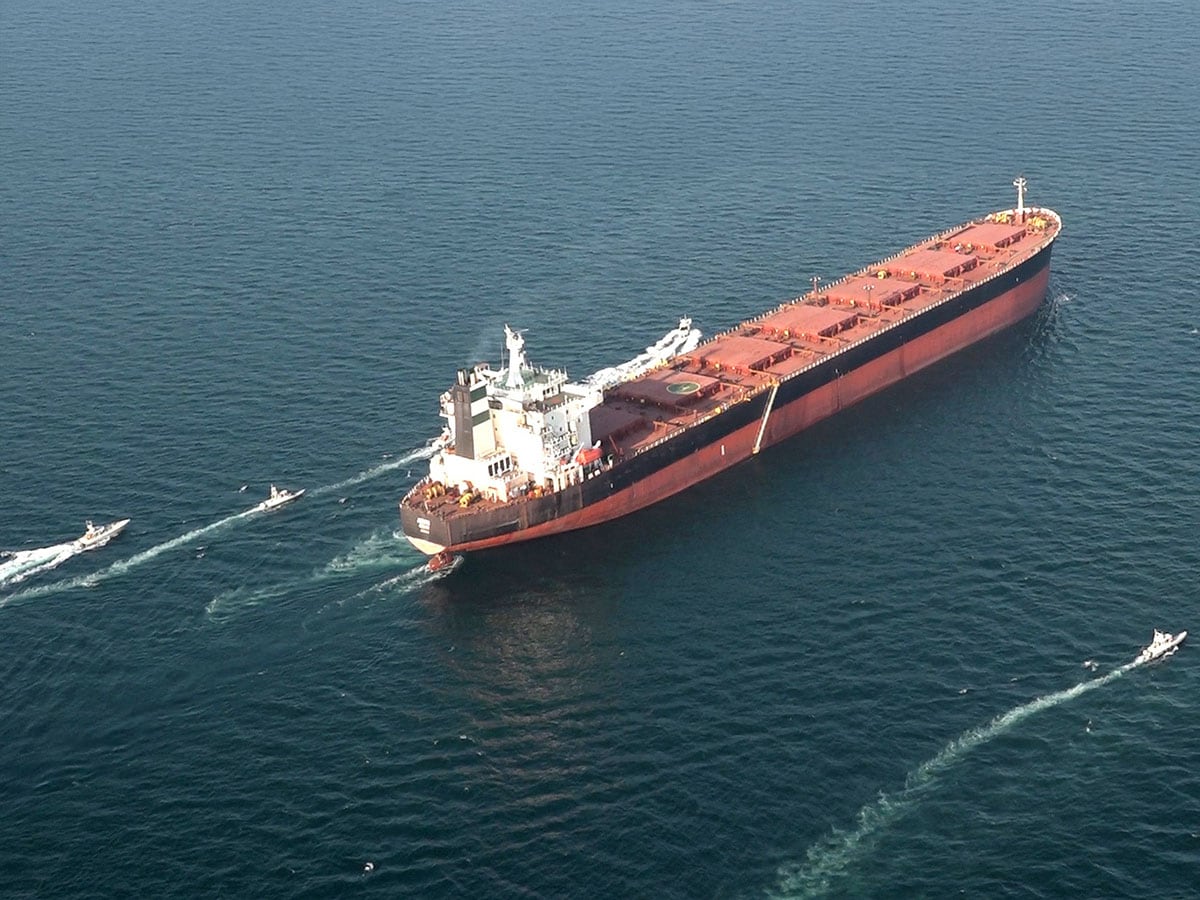
One of the world’s most critical oil chokepoints may be about to reopen. Iran says it is close to finalising a deal with Oman that will reopen the Strait of Hormuz, months after tensions between Tehran and Washington led to Iran restricting passage through the strait. India, which gets nearly 30-40 percent of its crude imports through that corridor, has so far weathered the disruption with surprisingly little impact.Nick Sharma, executive director of upstream energy at S&P Global Energy, tells Forbes India how the world—not just India—avoided a full-blown price shock, and why domestic exploration along with investing in overseas assets is central to keeping it that way.
New Delhi is already moving on that front: The Union Cabinet last week cleared the Rs 84,084-crore Samudra Manthan National Offshore Exploration Scheme, which will fund half the cost of drilling a deep-sea or ultra-deep-water well—or Rs 650 crore, whichever is lower—directly from the budget. Edited excerpts from the interview.On India’s crude oil dependencyIndia’s energy security is a concern across several fronts, but the liquids side is the most compelling. India imports about 5 million barrels a day of crude oil, of which roughly 40 percent transits the Strait of Hormuz. In the short term, India has diversified its sourcing well, but the bigger picture is that India’s energy demand, including crude oil, is on an exponential growth path.
Domestic production currently meets only about 10 percent of demand, and that isn’t going to change. Whatever anyone says, for the next ten years, India’s energy import gap is only going to widen.Also Read: Strait of Hormuz disruption and implications for risk, continuity, and strategicOn India’s options to manage that gapThere are three principal levers.First, accelerate domestic exploration activities, but there are limits here, because most of the known basins are on the east coast and they are gas-prone. Exploring new basins takes a very long time.
A lot of that burden falls on the national oil companies, ONGC and Oil India.I’ll give you an anecdote here. If you look at Namibia, on the west coast of Africa, it’s taken the better part of two decades to unlock the formula of that basin—where the real “sweet spot” of the resource base actually is.
Many wells were drilled unsuccessfully until TotalEnergies finally cracked the code around 2022-23. Even then, when a wave of companies rushed in, follow-up drilling in areas thought to be more promising to the north has largely failed, and the industry is now moving toward the center and south.
The point is: It takes a long time to identify the right sweet spots in a basin. In India’s context, while [exploration in] Andamans is happening, it will take years to appraise and mature. It doesn’t solve the near-term energy security problem.The second lever is [continuing to build strategic ties with] the Middle East. Right after any supply shock, markets swing back to the Middle East because everyone knows alternatives to that region are limited. So short-term supply agreements and proximity to the Middle East are beneficial.But you also need a hedge, and that hedge [which is the third lever] is your national oil companies building a much larger equity position in overseas assets.
That gives some security that you can bring barrels home and aren’t fully exposed to the open market. The challenge is that the capital required is large and needs to be deployed in a sustained way, so that over time, national oil companies can become as big overseas as they are at home.That kind of overseas investment has been very quiet over the last decade.On why Indian companies haven’t invested more overseasYou have to look at how the E&P [Exploration & Production] industry has evolved over the last two decades. From 2002 to 2014, oil prices moved up steadily and everyone got this kind of nasha (an almost intoxicating belief)
that oil prices were going to stay high forever. That view didn’t survive; prices became far more volatile after 2014.From 2008-2014, most national oil companies—including the Chinese—went on an overseas spending spree, and at high prices those deals looked okay. But when prices reversed, a lot of those deals were questioned by stakeholders internally.
You’re always going to have some good M&A deals and some not-so-good ones; you just have to hope that your larger deals do better.That dynamic pushed a lot of governments to pull back and refocus on their home markets. In India’s case, there was also a deliberate and reasonable push to deepen strategic supply relationships with Middle Eastern sellers of crude, and those long-term agreements have actually served India’s energy security well. But an event like the current one is a reminder that we’re more exposed than we’d like to think.Also Read: The next Strait of Hormuz isn’t a strait: AI, invisible risk, and the future of global powerOn should India be investing in oil, given the renewables push and the net-zero goalIndia’s energy demand is so large, and growing so fast, that every source has a home here—oil, gas, renewables and coal all have to grow to support 6-8 percent GDP growth. India doesn’t have the luxury of an energy mix built solely around transition goals; it needs all of the above.Renewables are having a strong run in certain segments, but oil isn’t being displaced from the economy any time soon. We project India will be a key demand driver of the oil market for at least the next two decades.On what would help on the domestic production sideIndia classifies basins [it has 26 sedimentary basins] into three categories: Anything that’s producing is called Category 1 (Mumbai High, Krishna-Godavari, Cambay); Category 2 covers basins with discoveries but no production; Category 3 is pure frontier like the Andaman basin.
Those have different fiscal terms, which means you get a lot more flexibility from the government. And because the risk is high, the return to the investor is also much higher.Right now, about 90 percent of production comes from existing Category 1 basins, and there’s plenty of undrilled potential within them, but current fiscal terms often make that drilling uneconomic.You need to offer some more incentives to the companies operating in that area so they can go and drill those more difficult opportunities.Malaysia is a good comparison: It has separate fiscal terms for shallow water, deepwater, enhanced deepwater, small discoveries and such. They’ve got, like, six different structures within the same basin, allowing different types of opportunities to be developed economically, often with fast time-to-production (one to three years)
because the infrastructure already exists.On why the world didn’t feel the full impact of Strait of Hormuz disruptionThe biggest shock for us [after the conflict started] was how quiet the oil market was. This was a generational event.
We’ve seen disruptions before, but to take 20 percent of oil and gas out of the market... that’s unprecedented.
The disruption to the base crude oil supply was around 15 million barrels a day.What cushioned the market was a combination of two things: Demand destruction and inventory drawdowns.Countries that could pare demand, did so.Other countries like China, South Korea and Japan—which have close to one year of strategic reserves cover—didn’t come into the market for crude.Collectively, we had about eight million barrels a day of demand come off the market. And then we had about five million barrels a day of inventory drawdown. That protected us in this situation.But if we had seen China or Korea or Japan or Southeast Asia or India operating like normal, then it would have been quite a catastrophic scenario because there’s just not enough liquid and volumes to go around.On where prices would have gone without that inventory bufferUnder a normal expectation, given the scale of the physical supply disruption, prices could easily have moved well into the $100s. If you get to the high-hundreds, at that point, the prices are insignificant because it will just destroy demand.Countries like Australia—which had only about one month of refined product cover— came under real stress early on; there were reports of the Australian and Singaporean governments discussing product swaps. South Koreans were discussing reserve management.
The system was scrambling to recalibrate in real time, and it would not have held if the disruption had persisted much longer.